What is SEO and How Does It Work in 2025? Complete Beginner's Guide

🎯 Key Takeaways
- SEO Definition: Search Engine Optimization is the process of improving your website to increase visibility in search engine results pages (SERPs)
- Three Pillars: On-Page SEO, Off-Page SEO, and Technical SEO work together to improve rankings
- Timeline: Expect 3-6 months for initial results, 6-12 months for significant improvements
- ROI: SEO delivers 5.3x higher ROI than paid advertising in the long term
- 2025 Focus: E-E-A-T, user experience, and AI-optimized content are critical ranking factors
What is SEO? (Definition & Meaning)
SEO (Search Engine Optimization) is the practice of optimizing your website to improve its visibility and ranking in organic (non-paid) search engine results. The goal is to attract more relevant traffic from people searching for products, services, or information related to your business.
In simpler terms, SEO is the process of making your website more attractive to search engines like Google, Bing, and Yahoo so they rank your pages higher when people search for relevant keywords.
SEO Full Form & Meaning
- S - Search
- E - Engine
- O - Optimization
The term "Search Engine Optimization" was first used in 1997, and since then, SEO has evolved dramatically. Today, SEO encompasses hundreds of techniques and strategies to help websites rank higher in search results.
Why is SEO Important in 2025?
📊 SEO Statistics You Should Know
- 68% of all online experiences begin with a search engine (BrightEdge)
- 53.3% of all website traffic comes from organic search (BrightEdge)
- 75% of users never scroll past the first page of search results (HubSpot)
- The first organic result in Google gets 27.6% of all clicks (Backlinko)
- SEO leads have a 14.6% close rate vs. 1.7% for outbound leads (Search Engine Journal)
- 92.96% of global traffic comes from Google Search, Images, and Maps (SparkToro)
For businesses in India, SEO is particularly crucial because:
- 700+ million internet users in India actively search for products and services online
- Local search ("near me" queries) has grown by 500% in recent years
- Mobile searches account for 70%+ of total search traffic in India
- Cost-per-acquisition through SEO is 61% lower than paid advertising
How Search Engines Work
To understand SEO, you first need to understand how search engines like Google work. Search engines perform three primary functions:
Crawling
Search engines use automated programs called "crawlers" or "spiders" (Googlebot for Google) to discover and scan web pages. These crawlers follow links from page to page, reading content and code to understand what each page is about.
Indexing
After crawling, search engines store and organize the information in a massive database called the "index." This index is like a giant library catalog containing information about billions of web pages. If your page isn't indexed, it cannot appear in search results.
Ranking
When someone searches, the search engine's algorithm analyzes all indexed pages and ranks them based on relevance, quality, and hundreds of other factors. The goal is to show the most useful results for each query.
Google's Algorithm: The Ranking Brain
Google uses over 200 ranking factors in its algorithm to determine which pages rank for any given search. Some of the most important algorithm components include:
| Algorithm Component | Function | Impact |
|---|---|---|
| PageRank | Evaluates backlink quality and quantity | High |
| RankBrain | AI-based understanding of search intent | Very High |
| BERT | Natural language processing for context | High |
| Core Web Vitals | Page experience and loading speed | Medium-High |
| E-E-A-T | Experience, Expertise, Authority, Trust | Very High |
| MUM | Multitask Unified Model for complex queries | Growing |

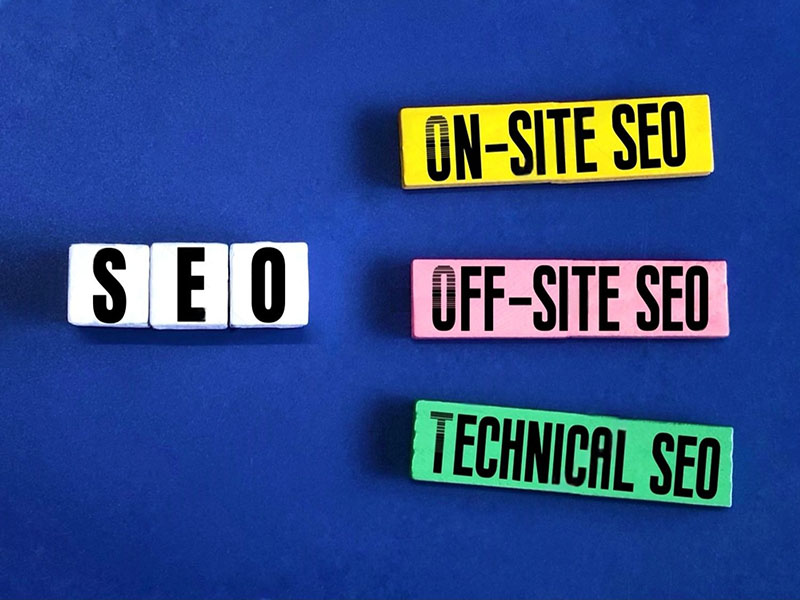
Types of SEO: The Three Pillars of Search Optimization
SEO can be divided into three main categories, each focusing on different aspects of website optimization. For comprehensive results, all three must work together:
1. On-Page SEO
Definition: Optimization of elements within your website that you have direct control over.
Key On-Page SEO Elements:
- Title Tags: The clickable headline in search results (55-60 characters)
- Meta Descriptions: Summary text below title (155-160 characters)
- Header Tags (H1-H6): Hierarchical content structure
- Keyword Optimization: Strategic placement of target keywords
- Content Quality: Comprehensive, valuable, original content
- Internal Linking: Links between pages on your website
- Image Optimization: Alt tags, file names, compression
- URL Structure: Clean, keyword-rich URLs
- Schema Markup: Structured data for rich snippets
2. Off-Page SEO
Definition: Activities done outside your website to improve search rankings, primarily focused on building authority and reputation.
Key Off-Page SEO Elements:
- Backlink Building: Getting links from other reputable websites
- Domain Authority: Overall website credibility score
- Social Signals: Engagement on social media platforms
- Brand Mentions: Unlinked mentions of your brand online
- Guest Posting: Publishing content on other websites
- Influencer Outreach: Collaborations with industry influencers
- Local Citations: NAP (Name, Address, Phone) listings
- Reviews & Ratings: Customer reviews on Google, Yelp, etc.
- Digital PR: Press coverage and media mentions
3. Technical SEO
Definition: Optimization of website infrastructure and backend elements to help search engines crawl and index your site efficiently.
Key Technical SEO Elements:
- Site Speed: Fast loading times (under 3 seconds)
- Mobile-Friendliness: Responsive design for all devices
- Core Web Vitals: LCP, FID/INP, CLS metrics
- XML Sitemap: Map of all pages for search engines
- Robots.txt: Instructions for crawlers
- HTTPS Security: SSL certificate implementation
- Canonical Tags: Preventing duplicate content issues
- Site Architecture: Logical URL and navigation structure
- Crawlability: No blocking of important pages
- Structured Data: Schema markup implementation
Additional SEO Specializations
🗺️ Local SEO
Optimization for location-based searches ("near me" queries). Critical for businesses serving specific geographic areas. Includes Google Business Profile optimization, local citations, and location-specific content.
Learn about Local SEO Services →🛒 E-commerce SEO
Specialized optimization for online stores, including product page optimization, category structure, product schema, and conversion-focused content strategies.
Learn about E-commerce Marketing →📱 Mobile SEO
Optimization specifically for mobile search and user experience. With mobile-first indexing, this is now critical for all websites.
Learn about Mobile Marketing →🎥 Video SEO (YouTube SEO)
Optimization of video content for search visibility on YouTube and Google video results. Includes title optimization, descriptions, tags, and engagement signals.
How Does SEO Work? (Step-by-Step Process)
SEO is not a one-time task but an ongoing process of optimization, monitoring, and improvement. Here's a comprehensive breakdown of how SEO works:
Website Audit & Analysis
The SEO process begins with a comprehensive audit of your current website to identify:
- Technical issues affecting crawlability and indexing
- On-page optimization gaps
- Content quality and relevance
- Backlink profile analysis
- Competitor positioning
- Current keyword rankings
Tools Used: Google Search Console, Google Analytics, Screaming Frog, Ahrefs, SEMrush
Keyword Research & Strategy
Identifying the right keywords is crucial for SEO success:
- Search Volume: How many people search for this keyword monthly
- Keyword Difficulty: How hard is it to rank for this keyword
- Search Intent: What does the user want when searching (informational, transactional, navigational)
- Relevance: How closely does this keyword relate to your business
- Competition: Who currently ranks for this keyword
Types of Keywords:
| Short-tail | "SEO services" | High volume, high competition |
| Long-tail | "best SEO company in Delhi for small business" | Lower volume, easier to rank |
| Local | "SEO company Janakpuri" | Location-specific, high intent |
| Transactional | "hire SEO expert Delhi" | Ready to convert |
On-Page Optimization
Optimizing individual pages for target keywords:
- Writing compelling title tags with primary keyword
- Crafting engaging meta descriptions with call-to-action
- Structuring content with proper header hierarchy (H1, H2, H3)
- Naturally incorporating keywords throughout content
- Optimizing images with alt text and compression
- Creating SEO-friendly URL structures
- Adding internal links to related pages
- Implementing schema markup for rich snippets
Technical SEO Implementation
Ensuring search engines can efficiently crawl and index your site:
- Improving page speed and Core Web Vitals
- Ensuring mobile responsiveness
- Creating and submitting XML sitemap
- Configuring robots.txt properly
- Implementing HTTPS security
- Fixing broken links and redirect chains
- Resolving duplicate content issues
- Optimizing site architecture and navigation
Content Creation & Optimization
Creating valuable content that ranks and engages:
- Writing comprehensive, in-depth content (1500+ words for competitive topics)
- Addressing user search intent completely
- Including relevant statistics, examples, and case studies
- Creating diverse content types (guides, how-tos, listicles)
- Updating and refreshing existing content
- Building topical authority through content clusters
Off-Page SEO & Link Building
Building website authority through external signals:
- Earning high-quality backlinks from relevant websites
- Guest posting on authoritative industry blogs
- Building local citations (for local businesses)
- Digital PR and media outreach
- Social media promotion
- Encouraging and managing reviews
- Brand mention acquisition
Monitoring, Analysis & Refinement
Continuous tracking and improvement:
- Tracking keyword rankings weekly/monthly
- Analyzing organic traffic trends
- Monitoring Core Web Vitals
- Reviewing user behavior metrics (bounce rate, time on site)
- Identifying new keyword opportunities
- Adapting to algorithm updates
- Competitor monitoring
- Monthly reporting and strategy adjustment
Google Ranking Factors in 2025
Google uses over 200 ranking factors, but some carry more weight than others. Here are the most important ranking factors for 2025:
🏆 High Impact Factors
1. Content Quality & E-E-A-T
E-E-A-T stands for Experience, Expertise, Authoritativeness, and Trustworthiness. Google prioritizes content created by people with real experience and expertise.
- Experience: Does the author have first-hand experience with the topic?
- Expertise: Is the content created by a subject matter expert?
- Authoritativeness: Is the website/author recognized as an authority?
- Trustworthiness: Is the website secure, accurate, and transparent?
Impact: ⭐⭐⭐⭐⭐
2. Backlink Quality
Links from authoritative, relevant websites remain one of the strongest ranking signals. Quality matters more than quantity—a few links from high-authority sites outweigh hundreds of low-quality links.
Impact: ⭐⭐⭐⭐⭐
3. Search Intent Alignment
Your content must match what users are actually looking for. Google analyzes user behavior to determine if your page satisfies the search intent.
- Informational: User wants to learn ("what is SEO")
- Transactional: User wants to buy ("SEO services pricing")
- Navigational: User wants a specific site ("Aanve login")
- Commercial Investigation: User is researching before purchase ("best SEO company Delhi")
Impact: ⭐⭐⭐⭐⭐
📊 Medium-High Impact Factors
4. Page Experience & Core Web Vitals
Google's Core Web Vitals measure user experience:
- LCP (Largest Contentful Paint): Loading speed - should be under 2.5 seconds
- INP (Interaction to Next Paint): Interactivity - should be under 200ms
- CLS (Cumulative Layout Shift): Visual stability - should be under 0.1
Impact: ⭐⭐⭐⭐
5. Mobile-Friendliness
With mobile-first indexing, Google primarily uses the mobile version of your site for ranking. Mobile-responsive design is no longer optional.
Impact: ⭐⭐⭐⭐
6. On-Page Optimization
Proper use of title tags, meta descriptions, headers, and keyword placement still matters significantly.
Impact: ⭐⭐⭐⭐
7. Content Depth & Comprehensiveness
Pages that thoroughly cover a topic tend to rank higher than thin content. This doesn't mean longer is always better—it means covering all aspects of the topic users care about.
Impact: ⭐⭐⭐⭐
📈 Other Important Factors
- HTTPS Security: Secure sites rank better than non-secure
- Domain Authority: Established domains have ranking advantages
- Internal Linking: Proper internal link structure helps crawling
- User Engagement: Click-through rate, dwell time, bounce rate
- Fresh Content: Regularly updated content can rank better
- Schema Markup: Structured data helps search engines understand content
- Local Signals: Google Business Profile, local citations, reviews
- Social Signals: While not direct factors, social presence correlates with rankings
💡 Pro Tip from Aanve Digital Solutions
Don't chase individual ranking factors. Focus on creating genuinely helpful content for your audience, ensuring great user experience, and building authentic relationships for links. Google's algorithms are designed to reward websites that prioritize users over search engines.
SEO vs PPC: Understanding the Difference
Both SEO and PPC (Pay-Per-Click) are essential components of digital marketing, but they work differently and serve different purposes.
| Aspect | SEO (Organic) | PPC (Paid Ads) |
|---|---|---|
| Cost Structure | Time/resource investment; no per-click cost | Pay for each click (₹5-₹500+ per click) |
| Time to Results | 3-6 months for initial results | Immediate traffic once ads are live |
| Sustainability | Long-term; traffic continues without ongoing spend | Stops immediately when you stop paying |
| Trust & Credibility | Higher trust (users prefer organic results) | Lower trust (marked as "Ad") |
| Click-Through Rate | Higher CTR for organic results | Lower CTR but highly targeted |
| ROI (Long-term) | 5.3x average ROI | 2x average ROI |
| Control | Limited control over rankings | Full control over placement, budget |
| Best For | Brand building, long-term growth | Immediate leads, promotions, testing |
🎯 Our Recommendation: Use Both Strategies Together
The most successful businesses don't choose between SEO and PPC—they use both strategically:
- Use PPC for immediate visibility while building SEO
- Use SEO for long-term sustainable traffic and reduced acquisition costs
- Use PPC data to inform SEO keyword strategy
- Retarget SEO visitors with PPC ads for conversion
Benefits of SEO for Businesses
Investing in SEO provides numerous benefits that compound over time:
Increased Organic Traffic
Higher rankings mean more visibility and clicks. The first position in Google gets 27.6% of all clicks, compared to just 2.4% for position 10.
Cost-Effective Marketing
While SEO requires investment, the long-term cost-per-acquisition is 61% lower than paid advertising. Once you rank, you don't pay per click.
Targeted Traffic
SEO brings users who are actively searching for your products/services, resulting in higher-quality leads with stronger purchase intent.
Credibility & Trust
Users trust organic results more than ads. Ranking on page 1 signals to users that Google trusts your website as authoritative.
Long-Term Results
Unlike paid ads that stop when you stop paying, SEO builds lasting visibility. Pages can rank for years with proper maintenance.
Better User Experience
SEO best practices (fast loading, mobile-friendly, quality content) also improve user experience and conversion rates.
Measurable Results
Every aspect of SEO can be tracked and measured—rankings, traffic, conversions, ROI—allowing for data-driven decisions.
Competitive Advantage
If you're not doing SEO, your competitors are. Ranking above competitors means capturing market share they would otherwise get.
📋 Real Results: Aanve SEO Case Studies
See how we've helped businesses like yours achieve significant growth through SEO:
- Professional Services: 340% increase in organic leads
- Local Services: 280% growth in phone calls from search
How Long Does SEO Take to Show Results?
One of the most common questions we receive at Aanve Digital Solutions is: "How long will it take to see SEO results?" The honest answer depends on several factors.
Foundation Phase
What Happens:
- Technical SEO fixes implemented
- On-page optimization completed
- Content strategy development
- Initial content creation begins
- Link building campaigns start
Expected Results: Minor ranking improvements, increased crawling/indexing, improved site health scores
Growth Phase
What Happens:
- Content library expanding
- Backlinks starting to impact
- Keywords moving into top 20-50
- Organic traffic beginning to increase
Expected Results: 20-50% increase in organic traffic, rankings for long-tail keywords, improved domain authority
Acceleration Phase
What Happens:
- Authority building showing results
- Competitive keywords improving
- Content ranking for multiple keywords
- Significant traffic growth
Expected Results: 100-200%+ traffic increase, page 1 rankings for target keywords, measurable lead/revenue growth
Dominance Phase
What Happens:
- Established topical authority
- Strong competitive positioning
- Compound growth effects
- Reduced dependency on paid ads
Expected Results: Sustained organic growth, rankings for competitive keywords, industry authority status
Factors Affecting SEO Timeline
| Factor | Faster Results | Slower Results |
|---|---|---|
| Website Age | Established domain (5+ years) | New domain (< 1 year) |
| Competition | Low competition niche | Highly competitive industry |
| Content Quality | High-quality, comprehensive | Thin, low-value content |
| Technical Health | Clean, fast website | Many technical issues |
| Resources | Dedicated SEO budget | Limited resources |
| Link Profile | Existing quality backlinks | Few or low-quality links |
⚠️ Important Note
Be wary of anyone promising guaranteed rankings or overnight SEO results. Legitimate SEO takes time, and any tactics promising instant results likely involve black-hat techniques that can result in Google penalties.
SEO Cost in India: 2025 Pricing Guide
SEO pricing in India varies widely based on scope, competition, and agency expertise. Here's a comprehensive breakdown:
Monthly SEO Packages in India
| Business Type | Monthly Cost Range | Typical Scope |
|---|---|---|
| Small Local Business | ₹15,000 - ₹30,000 | Local SEO, 10-15 keywords, basic link building |
| SME / Startup | ₹30,000 - ₹60,000 | Full SEO, 25-50 keywords, content marketing |
| Medium Business | ₹60,000 - ₹1,00,000 | Comprehensive SEO, 50-100 keywords, aggressive link building |
| Large Enterprise | ₹1,00,000 - ₹5,00,000+ | Enterprise SEO, multiple locations, dedicated team |
| E-commerce | ₹50,000 - ₹2,00,000+ | Product SEO, category optimization, technical SEO |
One-Time SEO Services
| Service | Price Range | Deliverables |
|---|---|---|
| SEO Audit | ₹10,000 - ₹50,000 | Technical, on-page, off-page analysis with recommendations |
| Keyword Research | ₹5,000 - ₹20,000 | Comprehensive keyword strategy document |
| Technical SEO Setup | ₹20,000 - ₹75,000 | One-time technical optimization |
| SEO Consulting (hourly) | ₹2,000 - ₹10,000/hr | Expert consultation and strategy |
What Affects SEO Pricing?
- Industry Competition: Competitive industries (real estate, finance, healthcare) cost more
- Geographic Scope: National/international SEO costs more than local SEO
- Website Size: More pages require more optimization work
- Current Website State: Sites with major issues need more initial work
- Content Requirements: Quality content creation adds to costs
- Agency Experience: Experienced agencies with proven results charge premium rates
Get a Custom SEO Quote for Your Business
Every business is unique. Contact Aanve Digital Solutions for a free consultation and customized SEO proposal.
Book a Free Strategy Call →Or call us directly: +91 9015599355
Essential SEO Tools for 2025
Here are the tools professionals use for effective SEO:
🔍 Keyword Research Tools
- Google Keyword Planner (Free) - Basic keyword research
- Ahrefs (Paid) - Comprehensive keyword data
- SEMrush (Paid) - Keyword and competitor research
- Ubersuggest (Freemium) - Budget-friendly option
- AnswerThePublic (Freemium) - Question-based keywords
📊 Analytics & Tracking
- Google Analytics 4 (Free) - Traffic and behavior analysis
- Google Search Console (Free) - Search performance data
- Microsoft Clarity (Free) - Heatmaps and session recordings
- Rank Math / Yoast (Freemium) - WordPress SEO plugins
⚙️ Technical SEO Tools
- Screaming Frog (Freemium) - Website crawler
- Google PageSpeed Insights (Free) - Speed analysis
- GTmetrix (Freemium) - Performance testing
- Schema Markup Generator (Free) - Structured data creation
- Mobile-Friendly Test (Free) - Mobile compatibility check
🔗 Backlink Tools
- Ahrefs (Paid) - Best for backlink analysis
- Moz Link Explorer (Freemium) - Domain authority checker
- Majestic (Paid) - Trust flow metrics
- Google Disavow Tool (Free) - Toxic link removal
Common SEO Mistakes to Avoid
After helping businesses with SEO since 2013, we've seen these mistakes repeatedly. Avoid them for better results:
Keyword Stuffing
The Mistake: Overusing keywords unnaturally to manipulate rankings.
The Fix: Write naturally for humans first. Use keywords strategically but sparingly. Focus on semantic variations and related terms.
Ignoring Mobile Optimization
The Mistake: Not optimizing for mobile users when 70%+ of searches happen on mobile.
The Fix: Use responsive design, optimize for mobile speed, ensure tap targets are appropriate, test on multiple devices.
Neglecting Technical SEO
The Mistake: Focusing only on content while ignoring site speed, crawlability, and technical issues.
The Fix: Regular technical audits, fix site speed issues, ensure proper indexing, implement structured data.
Low-Quality or Thin Content
The Mistake: Publishing shallow content that doesn't provide real value to users.
The Fix: Create comprehensive, in-depth content that fully addresses user intent. Quality over quantity.
Buying Low-Quality Backlinks
The Mistake: Purchasing cheap links from link farms or irrelevant sites.
The Fix: Earn links naturally through quality content, guest posting on relevant sites, and digital PR.
Ignoring Local SEO
The Mistake: Not optimizing for local search when serving a specific geographic area.
The Fix: Claim and optimize Google Business Profile, build local citations, gather reviews, create location-specific content.
Not Tracking Results
The Mistake: Implementing SEO without measuring outcomes.
The Fix: Set up Google Analytics 4 and Search Console, track keyword rankings, measure conversions, analyze and adjust based on data.
Expecting Instant Results
The Mistake: Giving up on SEO after 1-2 months without results.
The Fix: Understand that SEO is a long-term strategy. Commit to at least 6-12 months of consistent effort.
How to Start SEO for Your Website
Whether you're doing SEO yourself or planning to hire an agency, here's how to begin:
Step 1: Set Up Analytics & Tracking
- Install Google Analytics 4 on your website
- Set up Google Search Console and verify ownership
- Submit your XML sitemap
- Set up goal/conversion tracking
Step 2: Conduct a Website Audit
- Check for technical issues (use Screaming Frog or Google Search Console)
- Analyze current rankings and traffic
- Evaluate content quality and gaps
- Review your backlink profile
Step 3: Perform Keyword Research
- Identify keywords your target audience searches for
- Analyze search volume and competition
- Map keywords to existing and new pages
- Prioritize based on business value and opportunity
Step 4: Optimize Existing Pages
- Update title tags and meta descriptions
- Improve header structure (H1, H2, H3)
- Enhance content quality and depth
- Add internal links
- Optimize images
Step 5: Create New Content
- Develop a content calendar
- Create valuable, keyword-targeted content
- Cover topics comprehensively
- Include various content types (guides, how-tos, case studies)
Step 6: Build Quality Backlinks
- Create linkable content assets
- Reach out for guest posting opportunities
- List your business in relevant directories
- Build relationships with industry peers
Step 7: Monitor and Iterate
- Track keyword rankings weekly
- Analyze traffic and conversion data monthly
- Identify what's working and what isn't
- Continuously optimize based on results
Need Help Getting Started?
SEO can be complex and time-consuming. If you'd rather focus on running your business while experts handle your SEO, Aanve Digital Solutions is here to help.
Since 2013, we've helped businesses across India achieve significant organic growth.
Frequently Asked Questions About SEO
What is SEO in simple terms?
SEO (Search Engine Optimization) is the practice of optimizing your website to rank higher in search engine results like Google. It involves improving your website's content, technical structure, and authority to attract more organic (non-paid) traffic from people searching for products, services, or information related to your business.
How long does SEO take to show results?
SEO typically takes 3-6 months to show initial results, with significant improvements visible in 6-12 months. The timeline depends on factors like website age, competition level, content quality, and SEO strategy implementation. Local SEO for less competitive keywords may show results faster, while competitive national keywords take longer.
What are the 3 main types of SEO?
The three main types of SEO are: 1) On-Page SEO - optimizing content, keywords, meta tags, and internal linking on your website pages. 2) Off-Page SEO - building backlinks and brand mentions from other websites to increase authority. 3) Technical SEO - improving website speed, mobile-friendliness, crawlability, and site architecture for better search engine access.
Is SEO better than paid advertising?
SEO and paid advertising serve different purposes. SEO provides long-term sustainable traffic without per-click costs but takes time to build. Paid advertising delivers immediate results but stops when you stop paying. Most successful businesses use both strategies together - paid ads for immediate leads and SEO for long-term organic growth and reduced acquisition costs.
How much does SEO cost in India?
SEO costs in India range from ₹15,000 to ₹1,00,000+ per month depending on business size, competition, and scope. Small local businesses typically invest ₹15,000-₹30,000/month, while medium businesses spend ₹30,000-₹60,000/month. Enterprise SEO for competitive industries can cost ₹1,00,000+ per month. One-time SEO audits range from ₹10,000-₹50,000.
Can I do SEO myself?
Yes, you can learn and implement basic SEO yourself using free resources and tools like Google Search Console, Google Analytics, and Yoast/Rank Math plugins. However, effective SEO requires continuous learning, significant time investment, and technical expertise. For competitive keywords and faster results, working with an experienced SEO agency is recommended.
What are Google ranking factors in 2025?
Key Google ranking factors in 2025 include: Content quality and E-E-A-T (Experience, Expertise, Authoritativeness, Trustworthiness), page experience signals (Core Web Vitals, mobile-friendliness), backlink quality and relevance, search intent alignment, topical authority, user engagement metrics, HTTPS security, and structured data implementation. Google uses over 200 ranking factors in its algorithm.
What is the difference between SEO and SEM?
SEO (Search Engine Optimization) focuses on earning organic (free) traffic through website optimization and content creation. SEM (Search Engine Marketing) includes both SEO and paid search advertising (PPC/Google Ads). The key difference is that SEO results are organic and sustainable, while SEM paid results require continuous advertising spend to maintain visibility.
What is local SEO and why is it important?
Local SEO is the process of optimizing your online presence to attract customers from local searches. It's crucial for businesses serving specific geographic areas. Local SEO includes Google Business Profile optimization, local keyword targeting, citation building, review management, and location-specific content. "Near me" searches have grown by 500% in recent years, making local SEO essential for brick-and-mortar businesses.
What is E-E-A-T in SEO?
E-E-A-T stands for Experience, Expertise, Authoritativeness, and Trustworthiness. It's a framework Google uses to evaluate content quality. Experience refers to first-hand knowledge of the topic. Expertise means having relevant skills or qualifications. Authoritativeness relates to reputation in the industry. Trustworthiness covers accuracy, transparency, and website security. Building strong E-E-A-T signals is essential for ranking, especially in YMYL (Your Money Your Life) topics.
What are backlinks and why do they matter?
Backlinks are links from other websites pointing to your website. They act as "votes of confidence" in Google's eyes. Quality backlinks from authoritative, relevant websites signal that your content is valuable and trustworthy. Backlinks remain one of Google's top ranking factors. However, quality matters more than quantity - a few links from high-authority sites are more valuable than hundreds of low-quality links.
How do I know if my SEO is working?
Track these key metrics to measure SEO success: 1) Organic traffic growth in Google Analytics, 2) Keyword ranking improvements in Search Console or rank tracking tools, 3) Impressions and click-through rates in Search Console, 4) Organic conversions (leads, sales, calls), 5) Domain authority improvements, 6) Indexed pages count, 7) Backlink growth. Compare these metrics month-over-month and year-over-year to assess progress.
What is keyword cannibalization?
Keyword cannibalization occurs when multiple pages on your website target the same keyword, causing them to compete against each other in search results. This dilutes your ranking potential and confuses search engines about which page to rank. To fix it, consolidate similar pages, use canonical tags, or differentiate the target keywords for each page.
Should I hire an SEO agency or do it in-house?
The decision depends on your resources, expertise, and goals. Hire an SEO agency if: you lack in-house expertise, want faster results, need comprehensive strategy, or prefer to focus on core business. Do it in-house if: you have time to learn and implement, have simple local SEO needs, or have budget constraints. Many businesses start with an agency to build foundation, then transition to in-house maintenance.
What is a Google penalty and how do I recover?
A Google penalty is a ranking demotion caused by violating Google's Webmaster Guidelines. Penalties can be manual (human reviewer action) or algorithmic (automatic). Common causes include unnatural link building, thin content, keyword stuffing, and cloaking. To recover: identify the issue via Search Console, fix the violations, remove toxic backlinks using disavow tool, improve content quality, and submit a reconsideration request for manual penalties.
Conclusion: Start Your SEO Journey Today
SEO is no longer optional for businesses that want to thrive online. With 68% of all online experiences beginning with a search engine and 75% of users never scrolling past page one, your visibility in search results directly impacts your business growth.
📌 Key Takeaways from This Guide:
- SEO is a long-term investment that delivers sustainable, cost-effective traffic
- Three pillars — On-Page, Off-Page, and Technical SEO — must work together
- Content quality and E-E-A-T are more important than ever in 2025
- Expect 3-6 months for initial results, 6-12 months for significant growth
- Avoid shortcuts — black-hat tactics lead to penalties
- Measure everything — data-driven decisions lead to better results
Whether you're just starting or looking to improve your existing SEO efforts, the principles in this guide will help you build a strong foundation for organic search success.
🏆 Why Choose Aanve Digital Solutions for SEO?
- 12+ Years Experience: Serving businesses since 2013
- Proven Results: Check our case studies for real client success stories
- Transparent Approach: No black-hat tactics, only sustainable strategies
- Local Expertise: Deep understanding of the Indian market
- Full-Service Agency: SEO, PPC, Social Media, Content, and Web Design under one roof
- Dedicated Support: Direct access to your SEO team
Ready to Grow Your Organic Traffic?
Get a FREE SEO audit and discover opportunities to improve your search rankings.
📍 Visit Us: 220 B, 2nd floor, Jaina Tower 2, Janakpuri District Center, New Delhi 110058
📱 Call: +91 9015599355
📧 Email: [email protected]
